Public amphibian reference
Frog Field Guide
Learn how frogs live, what they eat, why their calls matter, and how healthy wetlands depend on these small amphibians.
Identification
What makes a frog a frog?
Frogs are tailless amphibians with moist skin, strong hind legs, and a life cycle tied closely to water. Toads are a type of frog, usually with drier, bumpier skin and shorter hops, but the distinction is informal rather than a strict scientific boundary.
Skin
Often smooth and permeable, helping frogs exchange water and gases with their environment.
Eyes
Large eyes provide wide-angle vision and help push swallowed prey down the throat.
Feet
Webbing, toe pads, or digging tubercles reveal whether a frog swims, climbs, or burrows.
Call
Male frogs use species-specific calls to attract mates and defend breeding sites.
Life cycle
From pond jelly to night hunter
Eggs
Many species lay clusters or strings of jelly-coated eggs in still or slow water.
Tadpoles
Larvae breathe with gills, graze algae or detritus, and develop legs over time.
Metamorphosis
Young frogs absorb the tail, switch to lungs, and begin feeding on small animals.
Adults
Adults return to suitable breeding habitat when rain, temperature, and day length align.
More frog facts
Small amphibians with surprising skills
Many frogs absorb water through a specialized pelvic patch instead of drinking with their mouths.
A frog's tongue can snap out, grip prey with sticky saliva, and retract in a fraction of a second.
Some temperate frogs survive cold months by lowering activity and sheltering in mud, leaf litter, or burrows.
The round eardrum behind each eye, called the tympanum, can help identify species and sometimes sex.
Bright skin can warn predators about toxins, while mottled greens and browns help other frogs disappear.
Because their skin and eggs are sensitive, frog populations often reflect changes in water quality and habitat health.
Frog snapshots
A closer look at frog variety
Frog quiz
Test your field guide knowledge
Species finder
Common frog lifestyles
Tree frogs
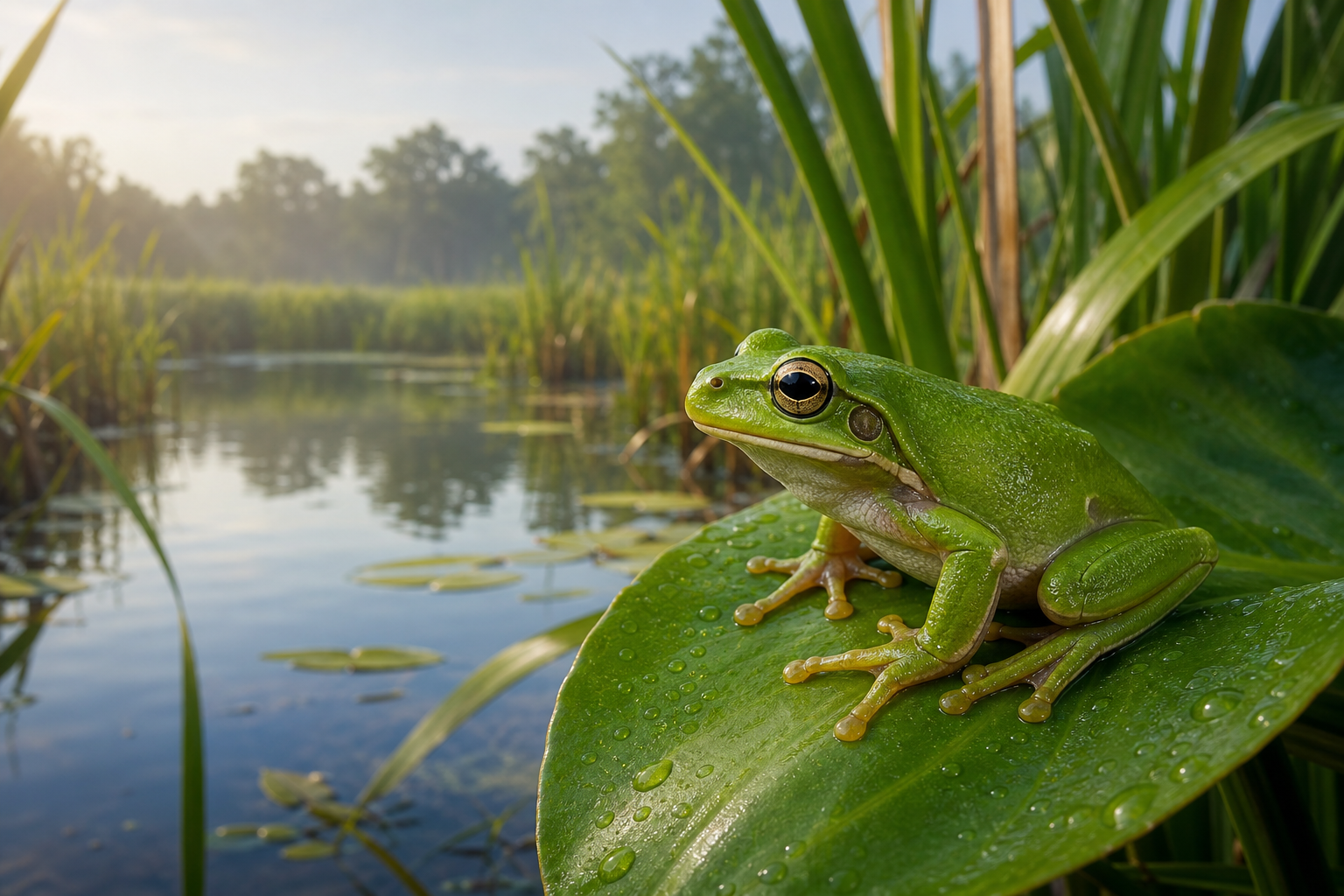
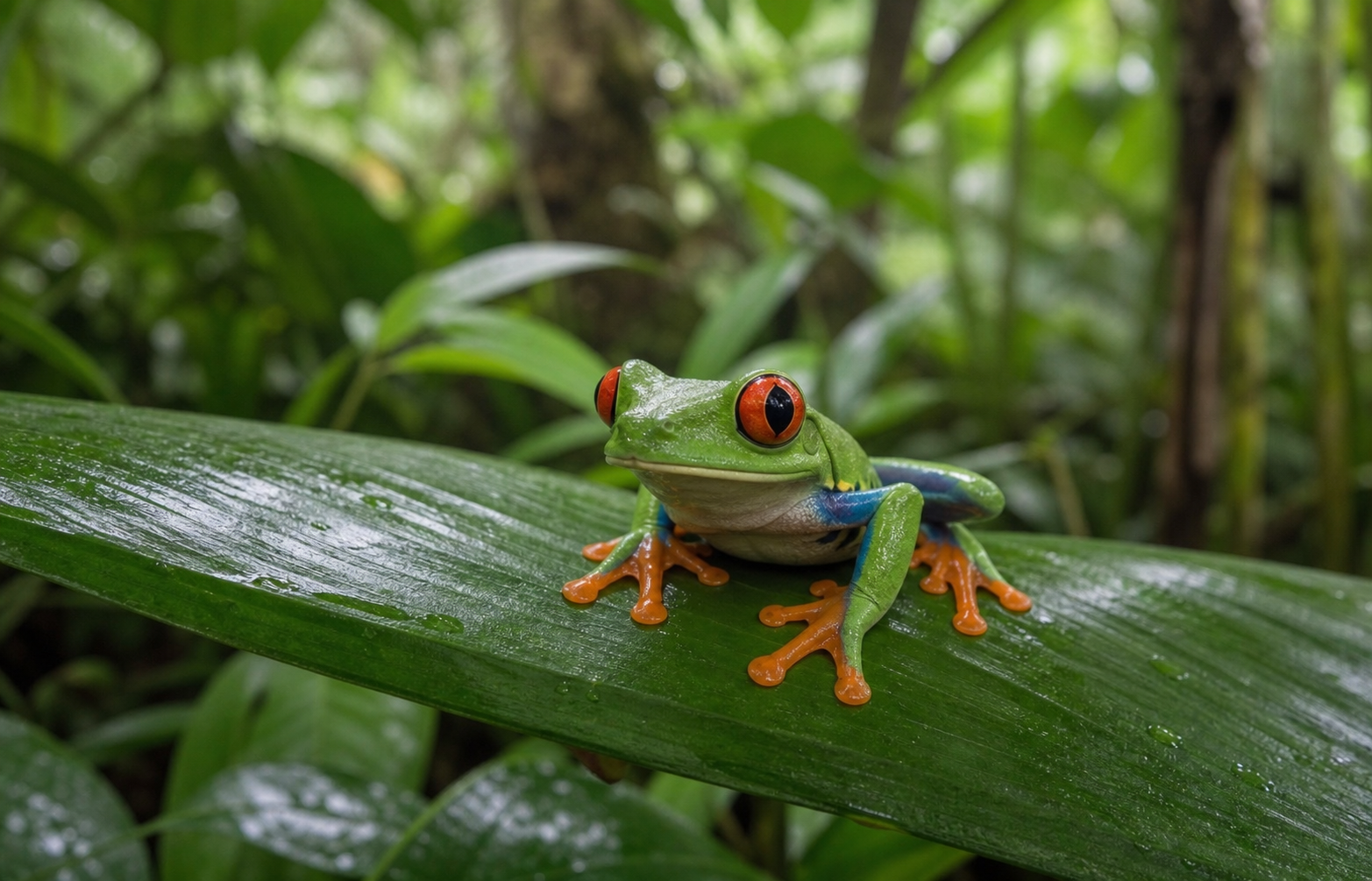
Climbers with adhesive toe pads, often calling from leaves, reeds, or branches near water.
Pond frogs
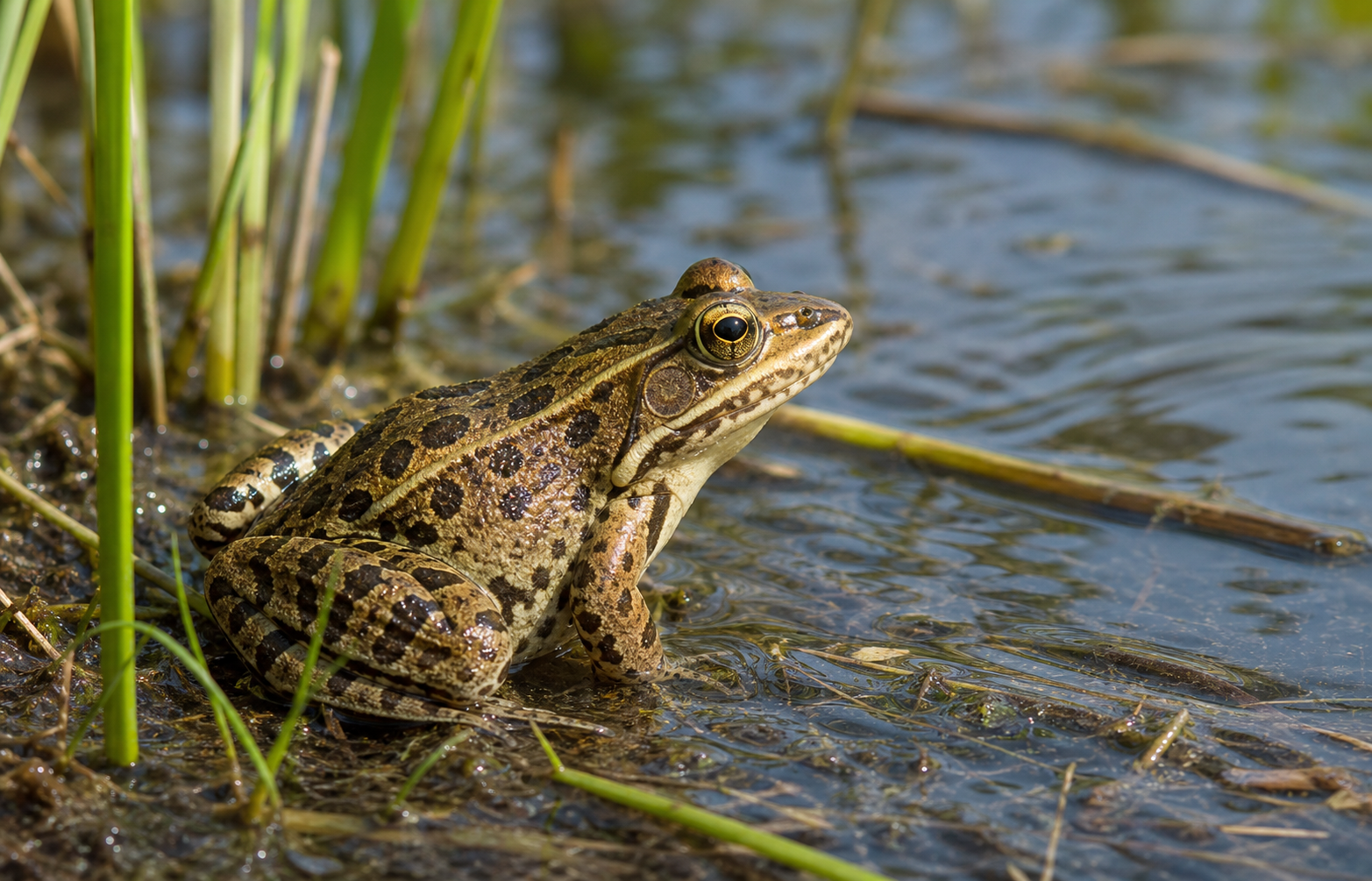
Strong swimmers that bask along banks and dive quickly when disturbed.
Spadefoots
Burrowing frogs that wait underground for heavy rains and temporary pools.
Glass frogs
Small tropical frogs, many with translucent undersides and eggs laid above streams.
Habitats
Healthy frog places are connected places
Frogs need shelter, clean water, insects, and safe routes between seasonal breeding pools and feeding areas. A backyard pond, roadside ditch, forest seep, or tropical canopy can all support frogs when water quality and cover are intact.
- Wetlands: shallow edges, aquatic plants, and low pollution.
- Woodlands: leaf litter, logs, and damp shade for daytime shelter.
- Grasslands: rain-filled pools and insect-rich vegetation.
- Urban gardens: pesticide-free cover and gently sloped ponds.
Conservation
Small actions protect local amphibians
Keep water clean
Reduce pesticides, fertilizers, soaps, and runoff that can pass through frog skin.
Leave cover
Logs, stones, native plants, and leaf litter provide cool hiding places.
Listen locally
Evening calls can reveal which species are breeding nearby and when they are active.